PAST
Personal memory. Family history. Forgotten places. Ruins. Archives. Lost media. Myth. Folklore. Deep time. Inheritance. Nostalgia. History. Permanence.
What refuses to disappear?
What lives inside of you? What have you remembered? What has shaped collective memory? What deserves to be remembered? What should be forgotten? Which histories have been erased, rewritten, or left unfinished? What objects, songs, photographs, buildings, rituals, or symbols seem to carry weight? How does the past continue to shape the present?
Long distance phone call, h brodsky
today I said into my phone that we could forgive what we suffered and a thousand miles away you agreed.
Thirteen years ago glass smashes and breaks a cupboard, childhood toys spilling out forever
Among Borrowed Stones, Louise Evans
My love and I travelled
to where the world remembers itself—
to Athens, where marble holds
the echo of forgotten voices,
and broken columns lift
the weight of centuries.
The Acropolis stood above us,
scarred but unforgotten.
Some stones still warmed beneath the Attic sun;
others were borrowed, never returned,
their absence polished into empire.
Even broken, it endured,
proving beauty need not remain whole
to survive.
We walked where philosophers
once questioned the shape of truth,
beneath the same restless, wine-dark sky,
until it dawned
that every moment
lays another stone
for tomorrow’s ruins.
Then the sea gathered us.
The Cyclades rose from the Aegean,
white villages clinging to cliffs,
blue domes catching the light
between sea and sky.
Ancient paths wound through olive groves,
their roots gripping the earth
as tightly as memory.
The waves erased our footprints,
yet the islands remained,
unchanged by our passing.
We were visitors
not only to a place,
but to the countless lives
that had loved these shores before us.
Among ruined temples
and quiet harbours,
I understood that time does not bury the past—
it just teaches us where to look.
It lingers in weathered stone,
in salt upon old walls,
in stories carried by the wind.
When we sailed away,
the sea closed softly behind us,
leaving no trace
except within memory—
where Athens still glows at sunset,
the islands drift
between history and dream,
and the sea carried us home,
but left a part of us
among the borrowed stones,
where history still speaks.
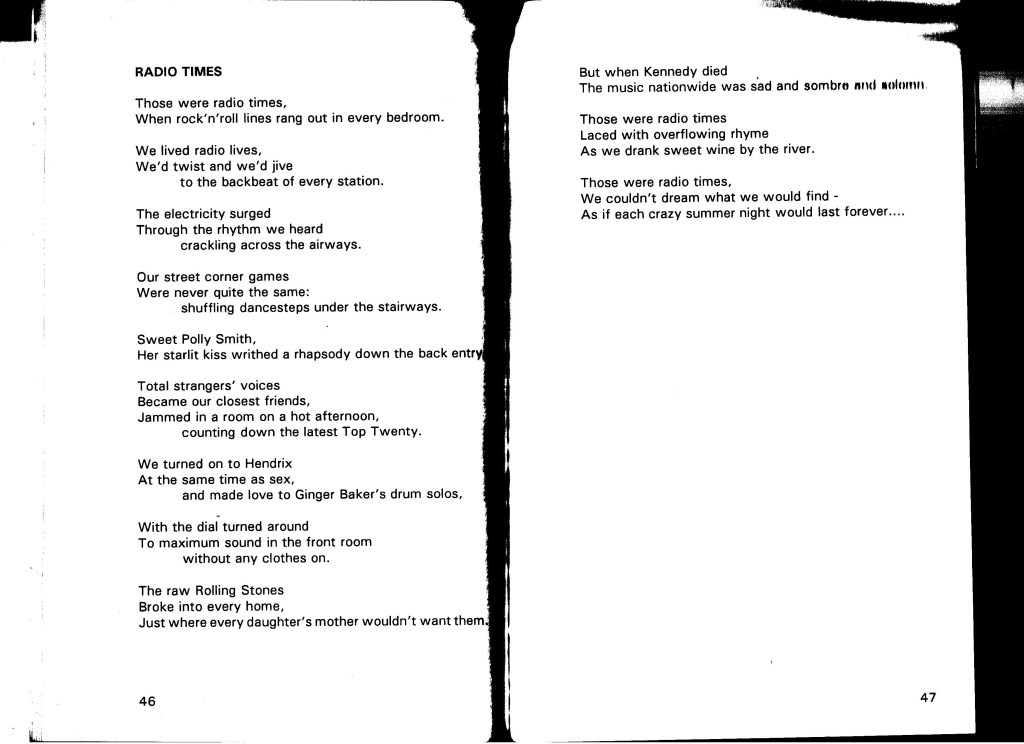
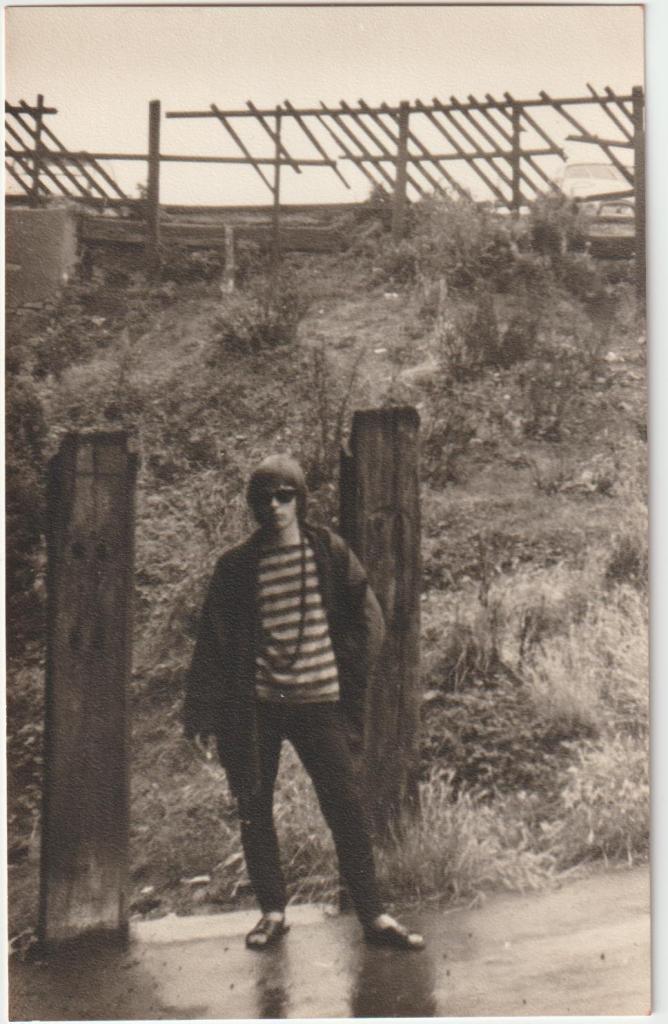
Radio Times, Dave Ward
Maudlin, Anna King
“But Venice, like Oxford, had kept the background for romance, and, to the true romantic, background was everything, or almost everything.” (Oscar Wilde)
And if I sift through these folds
of blue, we are still there beneath the
dropped sun, backs to the cooling façade
drooping with wisteria. Indolence melts
across the walls, students recasting themselves
in second-rate Evelyn Waughs, their
croquet-mallets prop-clumsy in their
hands. Even here, there is nothing so
serious as the slip of light across your
back, split open by the shade of yellowing
columns; and again, in the offices,
by design, as one is ground, and ground
again in the bright and gleaming engine,
this great and bowing stage set comes
tremendous break in the mechanism
& pulls & pulls these razor-strings of self —
clammy, sick and dark the day now snaps
apart, slick as a medical bag, wakeful
swoons being reserved for the
lucrative; and still, in the reeling
efficiency, some small stitch is made,
a concession
to the ongoing and gentle.
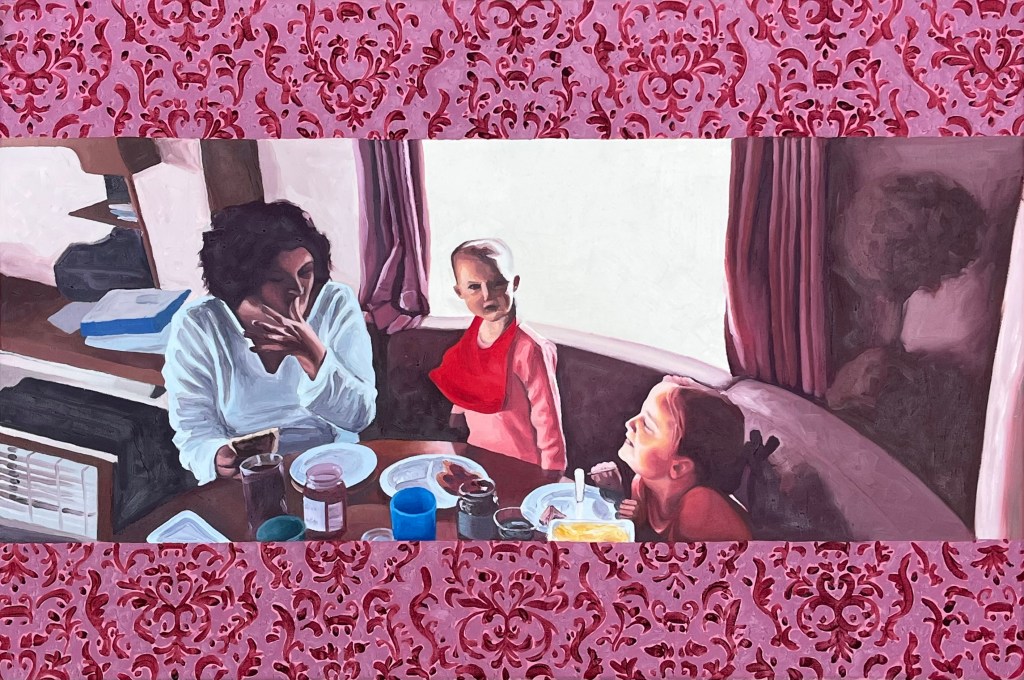
‘Memories from a caravan, taken sometime between 2004 and 2005’, oil on canvas, Zoe Williams
Songs of the Folk, Zach Bird
Spurred on by the jingle of an ice cream van, I find myself whistling the tune of Greensleeves whilst strolling down the street. The tune is very old, dating from at least the 16th century. It is a common myth that Henry VIII composed this tune. He did not. But people just like myself have wandered aimlessly through streets whistling the same tune since at least the days of Elizabeth I. I can imagine a long chain of fellow whistlers through the centuries. How many others have done the same?
Ralph Vaughan Williams wrote a classic arrangement of this tune, Fantasia on Greensleeves. He was a folk song collector. In the decade leading up to the First World War, he devoted a month a year to this endeavour. By train and bicycle he would traverse the English countryside, through remote villages whose way of life was already rapidly changing and in many cases disappearing, soon to be ravaged by the War. In village pubs and in the street, he spoke to locals, transcribing the songs he found, passed down through the centuries. That which was almost forgotten was preserved. He incorporated these tunes into his own music.
In the Lark Rise to Candleford, recollections of life in rural Oxfordshire in the 1880s, Flora Thompson wrote of when ‘a few songs were called for at the “Wagon and Horses”’:
‘So David would have his turn. He only knew the one ballad, and that, he
said, his grandfather had sung, and had said that he had heard his own
grandfather sing it. Probably a long chain of grandfathers had sung it; but
David was fated to be the last of them.’
This village may have had a long chain of grandfathers who sang the same tune and so this grandson, village, and region may feel a sense of ownership – but likely over the hill there existed a similar tune with similar words, and a few miles further perhaps the same again.
There is a famous idea, propagated by Jacob Grimm, that the folk song composes itself. Inherent to the folk-song is the obscurity of its author, origin, and age. So who do they belong to?
As I age and become increasingly sentimental, this music has an ever-greater effect on me. When I hear Vaughan Williams’ adaptations of these folk tunes, I feel connected to a past I never knew, and yet through the generations, created the past in which I grew up. We are 21st century children and yet our whole lives are built on that which predates us.
I listen to other adaptations of folk-song such as Joseph Canteloube’s beautiful Chants d’Auvergne. The harmony is lush and the melodies divine, but the effect is not the same. No doubt were I from that region the opposite would be true.
As these melodies strike my ear, I think of the people who lived before me, the millions who shaped the language I speak, the humour I share, the culture tacitly imbibed in me as a child. We are schooled in a collective memory that shapes each of us. Contrived though it often may be, in our collective memory we derive a sense of community and belonging from a shared past.
I feel the same about religion. I like the idea of God, sometimes I think I believe, other times less so. But I am fond of the words, the stories, the practice, the message, and above all the music. Whether or not I’ll go to heaven is almost irrelevant. Over centuries my predecessors with the same thoughts, feelings, and anxieties as I have engaged with the above and for millions, collective participation in this tradition has been a source of great comfort. To me that is where the beauty lies, in doing what so many have done before, and doing so together.
For many, hymns are a constant from school age to old age; from baptism to funeral. We gather and we sing together, hymns old and new that have been sung thousands of times by thousands of people. The music may occasionally be dreary, and performances often lacklustre but when we stand and sing together, we inherit and continue the ritual.
I remember when I was young, at Christmastime a group of us would go and visit the housebound elderly and sing to them a carol of their choosing. Hearing In the Bleak Midwinter brought a tear to several eyes. This was not necessarily our charity, but memories of music that has followed people throughout their lives. The carols they sang as children, I sang as a child. That is a shared past. I hope someone will sing carols to me when I am too frail to leave the house.
In a small hamlet in West Sussex in 1904, Vaughan Williams collected a folk melody which he named after the hamlet, Kingsfold. He paired this tune with the words of Horatius Bonar to create the hymn I Heard the Voice of Jesus Say. I shall walk down the street whistling this tune, thinking of all those who have whistled it before.
‘Privation’, Pen and Ink on Handmade Paper, Emily Turnbull.
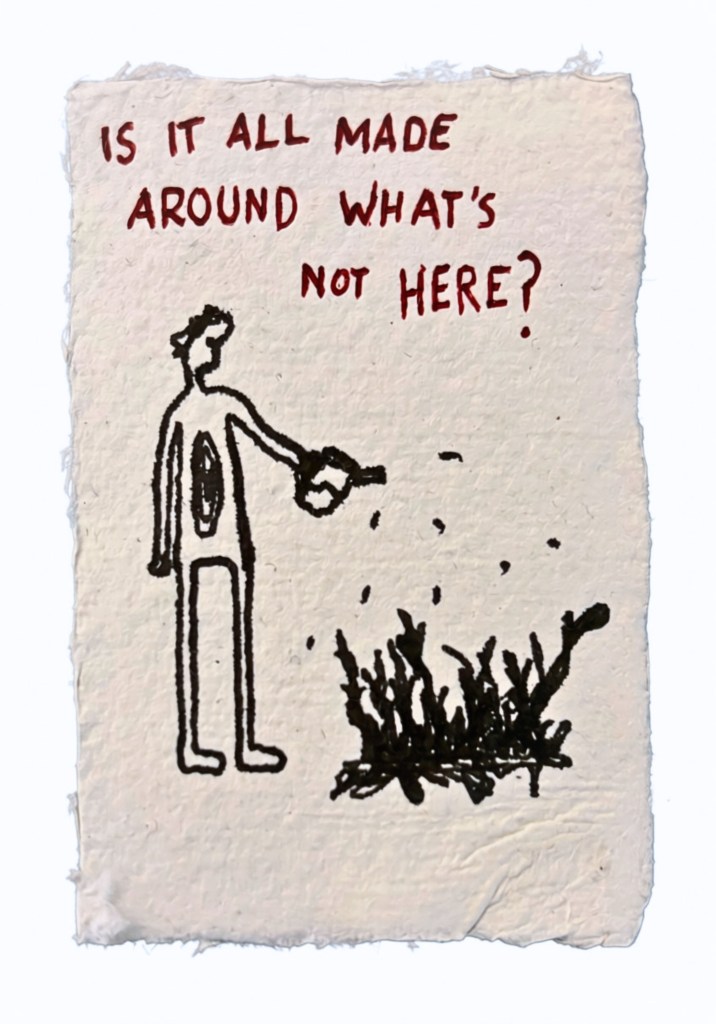
This piece began with a question I was asking: “Is it all made around what’s not here?” I wanted this phrase to point to the 20th century’s ambition and what it means for us now, reflecting back. I truly believe the previous century was forward-looking, and the 21st century has become one that is backwards-looking. Both these beliefs point me towards the past. So, in this piece I wanted to address the problems within both centuries and their attitudes. The 20th century’s innovation has been heralded as an incredible feat, one we might often wish to replicate, staring in awe at its momentum. But we ignore that this hunger (hunger being based in what is ‘lacking’) became self-consuming. The economy clearly couldn’t keep up, as we see with the 2008 financial crisis, based on paving over the overambitious momentum of the 20th century and is one example of the past’s facade. We could also look at the energy crisis and debates around whether we should continue technological innovation to self-actualise these 20th-century wishes, or if they should be abandoned based on their damage to our ecological climate. So, what remains as we look back is something that could be compared to how one views a naïve and optimistic childhood, hence the naïve style I went for in this art piece. We romanticise and indulge in the nostalgia of the past. So, in this piece I am aiming to address the two-pronged idea of the past: the past as it was, and our obsession with it now. Both seem to be centred on an absence (PRIVATION), on what isn’t here, rather than on what is.
Childhood Memories, Matthew Williams
Sitting in a quiet room sometimes
brings memories springing from obscurity.
They flicker faintly behind my eyes,
incoherent flashes, like snatches of conversation
from a radio crackling between stations.
A blazing sun wobbling in a bucket of soapy water
and a weighty sponge gliding over smooth, blue metal.
The encrusted underside of a wheel arch
comes up to my waist.
Scenes so distant they might have been dreamt.
Like the man who produces a horse from somewhere
and exercises it in the park.
He stands, smiling with paternal pride
as the horse winds round and round on a rope.
My small eyes saw a giant plough horse.
Why not give it a collar and blinkers too?
A football thuds nicely against a wall
and skids back across cracked pavement.
Shock, as it rolls into the road.
Kind neighbours, quiet neighbours.
Loud and menacing neighbours.
A towering back-garden bonfire late at night
threatens to consume the terrace.
A lonely figure with an obscured face
stares into the flames.
Car theft, assault and burglary.
Sharing, helping.
Feeding the cats and walking the dogs.
Clearer memories too.
Going for a walk on a Friday evening.
A woman is standing, arms crossed, on the curb
as if she’s waiting for the bus.
A tender moment between neighbours,
as one finishes putting the other’s children to bed.
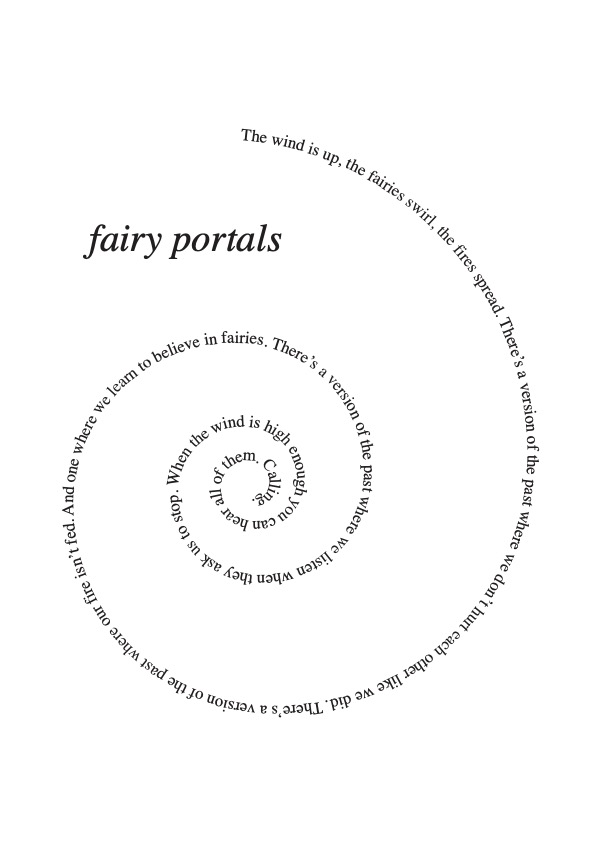
fairy portals, Rose Westrip